



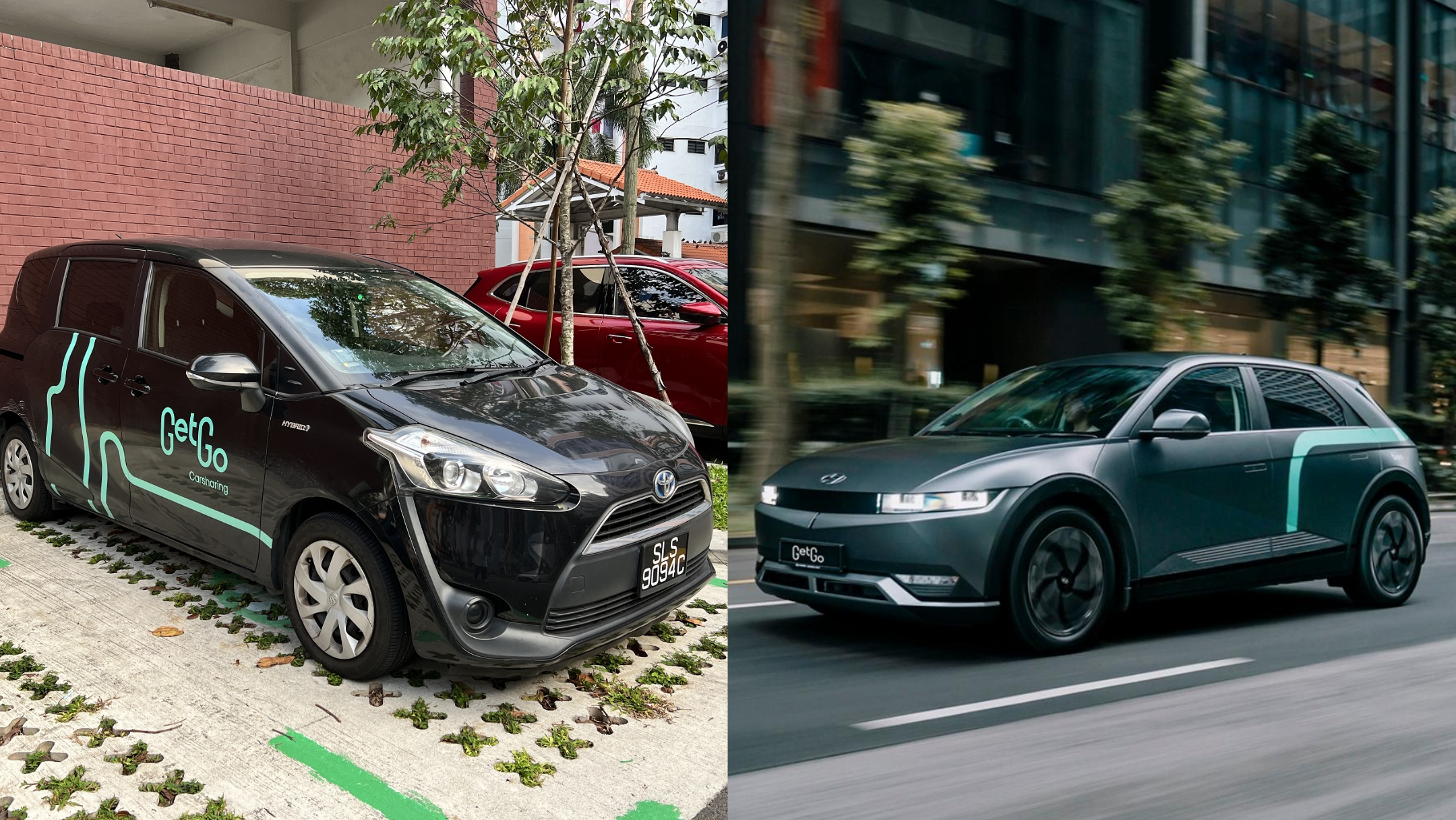
Every dinner conversation about cars in Singapore eventually arrives at the same question. Should your next car be electric? Your uncle swears by his trusty petrol sedan. Your colleague won't stop talking about how little she spends on charging. Both of them are right, sort of, and that's exactly what makes this decision so tricky.
As with many things in life, it depends. So let's run the numbers. From COE and rebates to road tax, fuel, and servicing, here's how an EV vs petrol car comparison really shakes out in 2026.
The upfront cost: neck-and-neck, but not for long
Sticker shock comes first. Like-for-like, EVs still carry higher price tags than their petrol equivalents, mostly because batteries are expensive to make. A mass-market electric SUV will typically list above a comparable petrol crossover, even from the same brand. But with government rebates, the story changes, and prices begin to even out.
If you register a fully electric car in 2026, you'll get two rebates stacked on top of each other. The EV Early Adoption Incentive (EEAI) knocks 45% off your Additional Registration Fee (ARF), capped at $7,500. The Vehicular Emissions Scheme (VES) adds up to $22,500 more for cars in the cleanest band. That's a combined saving of up to $30,000, which goes a long way towards closing the price gap.
One catch. These rebates are shrinking fast. The EEAI was capped at $15,000 just last year, and it disappears entirely after 31 December 2026. The VES rebate drops to $20,000 in 2027. Hybrids stopped qualifying for rebates altogether this year. If you're leaning electric, the discount window is closing.
However, even petrol car buyers won’t be spared after 2026, as the VES for these vehicles will increase by anywhere from $15,000 to $20,000 next year.
What about COE? No difference there. EVs with motors up to 110kW bid in Cat A alongside smaller petrol cars, and more powerful EVs bid in Cat B. With Cat A premiums sitting at $126,009 and Cat B at $126,989 in the latest June bidding, the COE is a painful great equaliser. It hurts everyone the same.
Road tax: where EVs quietly lose
Here's the part EV brochures don't shout about. Electric cars often pay more road tax than petrol cars, not less.
Petrol cars are taxed on engine capacity. EVs are taxed on motor power output, plus an Additional Flat Component (AFC) of $700 a year, which exists to make up for the petrol duties that EV drivers never pay at the pump.
The difference is real. A popular mid-size electric SUV with a 150kW motor pays roughly $2,200 a year in road tax once you include the AFC. A 1.6L petrol sedan? Around $740. That's about $1,460 extra every single year, just for existing.
Over a 10-year COE cycle, that adds up to over $14,000. Keep that figure in your back pocket, as it’ll for the maths later.
Energy costs: big wins for EVs
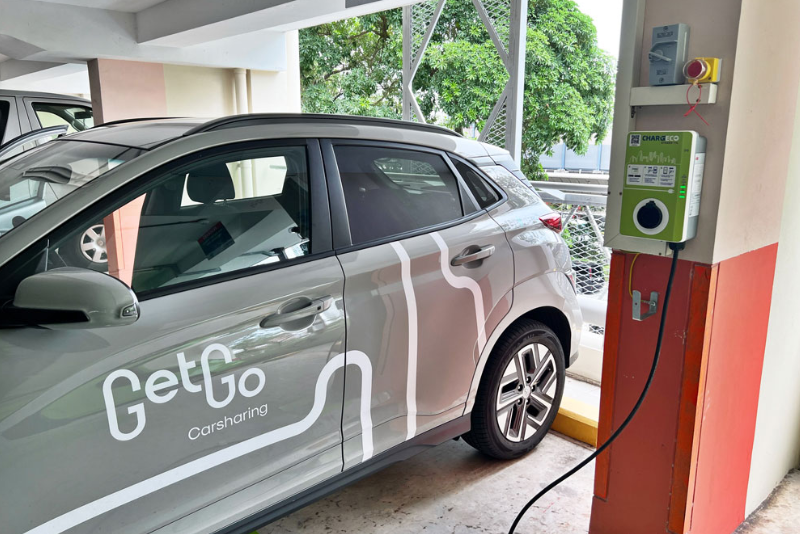
Now for the EV's favourite battleground.
Petrol prices have been elevated since March, when tensions in the Middle East disrupted global oil supply. Posted prices for 95-octane have hovered around $3.40 to $3.50 per litre at the major brands before card discounts. Filling a 50-litre tank at those prices costs upwards of $170 before discounts kick in. Ouch!
Electricity is a different story. Public AC charging generally runs between $0.50 and $0.80 per kWh, with DC fast charging costing more for the convenience. Topping up a typical 60 kWh battery from low to full costs somewhere in the range of $30 to $48, for roughly the same driving range as that $170 tank.
Per kilometre, the gap is stark. A petrol sedan doing 10km per litre costs around 34 cents per km at current pump prices. A typical EV consuming about 17 kWh per 100km costs roughly 10 cents per km on public AC charging. If you can charge at home overnight on a residential tariff, it gets even cheaper.
Drive 15,000km a year, and the difference is easily $3,000 or more annually. The more you drive, the more the EV pulls ahead. And if you're curious where to plug in, we've mapped out EV charging stations across Singapore.
Maintenance: fewer parts, fewer problems for EVs
An electric motor has dramatically fewer moving parts than a combustion engine. No oil changes. No spark plugs. No timing belts. Regenerative braking even means your brake pads wear out more slowly. Frankly, there’s a lot less to maintain.
A typical petrol car in Singapore costs $1,000 to $2,000 a year to service if it's a Japanese or Korean make, and more for continental brands. EV servicing can run up to a third cheaper over the first five years of ownership, since visits to the workshop are shorter and simpler.
You'll still pay for the usual wear items on both. Tyres, wipers, aircon servicing, the works. EVs are actually slightly harder on tyres because they're heavier and deliver instant torque, so don't expect to escape the tyre shop entirely.
Insurance: a small win for petrol
Insurance premiums for EVs in Singapore tend to run higher than for comparable petrol cars. Repair networks for EVs are still maturing, parts can be pricier, and a damaged battery pack is an expensive thing to assess. Fewer insurers offer EV-specific plans, which means less competition on price.
The gap isn't enormous, and it's narrowing as EVs become mainstream. But if you're comparing two specific models, get actual quotes for both before deciding. If you're new to the whole thing, our guide to the types of car insurance in Singapore covers what each policy actually protects.
The battery question
This is the one that keeps fence-sitters up at night. What happens when the battery dies?
A replacement pack can cost anywhere from $8,000 to $20,000 depending on the model. Scary! The reassuring context is that most manufacturers warranty their batteries for 8 years or more, and modern packs are designed to outlast that comfortably. Within a typical 10-year COE cycle, a full battery replacement is unlikely. Possible, but unlikely.
Petrol cars have their own late-life lottery, of course. Gearbox rebuilds, engine overhauls, and a 10-year-old continental car can produce repair bills that rival a battery pack. Neither side gets to claim total peace of mind here. That being said, while data is inconclusive due to the relative novelty of EVs, data from tens of thousands of longtime EV drivers shows that many of them are still trucking along just fine on their original batteries over 12 years after their initial purchase.
So which one is cheaper?
Time for the verdict. Sort of.
If you drive a lot, the EV wins. The fuel savings are so large that they swallow the higher road tax, the pricier insurance, and what's left of the upfront premium. Run the numbers and the picture is clear. The EV starts each year about $1,460 behind on road tax, but saves roughly 24 cents on every kilometre at current pump prices. That means it claws back the gap at around 6,000km a year, and the crossover climbs to roughly 8,000 to 9,000km if petrol prices settle back to calmer levels. Either way, anyone whose odometer climbs at a normal pace, daily commuters and frequent Malaysia trippers included, comes out ahead going electric, especially with rebates at their 2026 levels.
Here's the working, if you like to see the sums:
Road tax penalty (EV): $2,200 - $740 = $1,460 a year
Fuel cost (petrol): $3.40 per litre ÷ 10km per litre = $0.34 per km
Fuel cost (EV): 17 kWh per 100km × $0.60 per kWh ÷ 100 = $0.10 per km
Saving per km: $0.34 - $0.10 = $0.24 per km
Break-even: $1,460 ÷ $0.24 per km ≈ 6,100km a year
At a calmer $2.70 per litre, petrol drops to $0.27 per km, the saving shrinks to $0.17 per km, and the break-even rises to $1,460 ÷ $0.17 ≈ 8,600km a year.
If you drive occasionally, the petrol car holds its ground. Low annual mileage means the fuel savings never get big enough to offset the EV's fixed costs, particularly that road tax gap. A fuel-efficient petrol or hybrid sedan remains the more economical choice for weekend-only drivers.
And there's one more factor that no spreadsheet captures: charging access. If your carpark has reliable chargers, EV life is genuinely effortless. If it doesn't, you'll be planning your week around charging stops, and no amount of savings makes that fun.
Whichever way you lean, do the maths for your actual driving pattern, not the brochure's. The right answer for your colleague might be the wrong one for you.
See you on the road,
Amanda 💙
(Feature photo adapted from: Straits Times, Wah So Shiok)
Related articles
- The best vegan food in Singapore to get your greens in
- How to get a Singapore driving licence as a foreigner
- Your $500 CDC vouchers are arriving in June: everything you need to know, and how to use them to flex your adventures
- Where to find the cheapest fuel in Singapore right now
- The average COE price is over $100,000. Here’s what you could buy with that money instead.


