



.png)
If you've stepped outside recently and immediately regretted it, first of all: real. Every Singaporean loves complaining about the heat at any given moment (almost as much as we love complaining about the humidity), but risking heatstroke is no joke.
Of course, having things like sunscreen, a portable fan, and a bottle of water goes without saying. But as the climate heats up even more (💀), old methods may not cut it anymore. Read on to find out what you can do about the heat, plus some life hacks for the next time you find yourself bracing the terrors of direct sunlight.
Keeping yourself safe
Know what heat exhaustion looks like
Heat exhaustion starts off slowly, but gets serious quickly. Even when you feel alert and aware, you could be experiencing symptoms such as nausea, dizziness, headaches, muscle cramps, and excessive sweating — and before you know it, you’re on the floor.
Left untreated, though, heat exhaustion can progress to heat stroke, and that's a different story altogether. At that stage, you may see confusion, delirium, or loss of consciousness. If anyone around you shows those signs, call 995 immediately. While you wait, move them somewhere cool, remove outer clothing, and use cold, wet cloths on their neck, armpits, and head to bring their temperature down.
Looking after your car
Here's the thing people don't always think about: your car feels the heat, too. Singapore's combination of high ambient temperatures and bumper-to-bumper traffic puts real strain on a vehicle's systems, and a few ignored warning signs can turn into a pricey problem fast.
Check your coolant
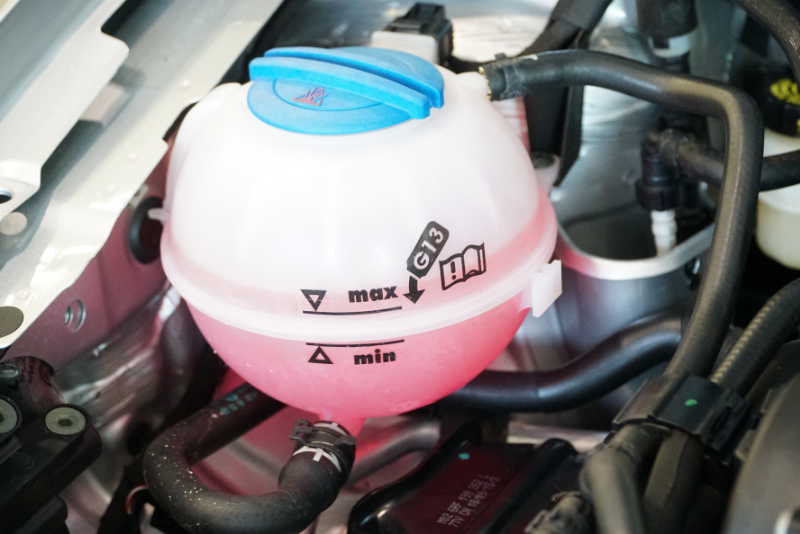
This is the big one. Low coolant levels are behind a large chunk of hot-weather breakdowns, and the consequences of ignoring it — warped cylinder heads, blown head gaskets — are both costly and avoidable. Get into the habit of checking that the coolant level sits between the "low" and "full" markings on the reservoir, especially before a long drive.
Be sure to look out for sweet smells coming from the engine (that's coolant leaking), or brown, rusty-looking fluid. Any of those is a cue to see a mechanic sooner rather than later. And never, ever recharge coolant fluid by yourself, as direct contact causes cryogenic burns or frostbite.
Watch your tire pressure
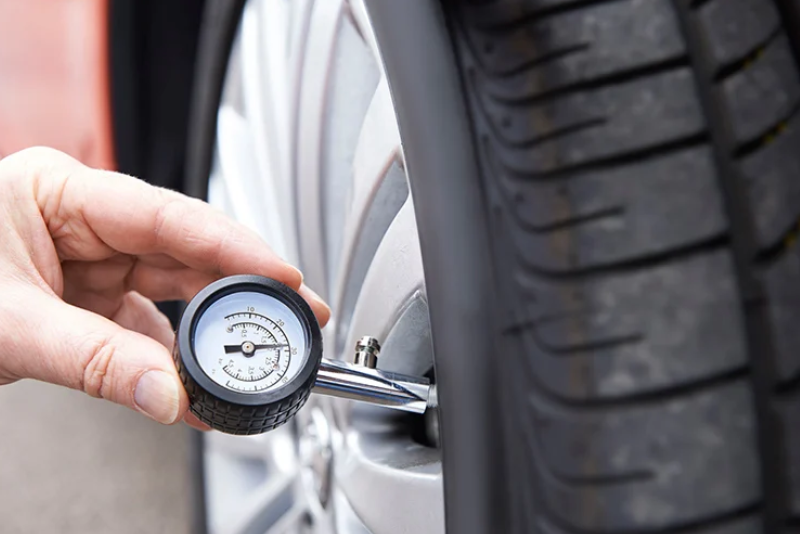
Hot roads and under-inflated tyres are not a good combination. Heat builds air pressure inside the tyre, and if the starting pressure is off, that becomes a recipe for uneven wear — or worse, a blowout. Check your tyre pressure against the manufacturer's recommendation (usually found on a sticker inside the driver's door) and do it in the morning before the car's been sitting in the sun, when readings are most accurate.
Get your battery tested
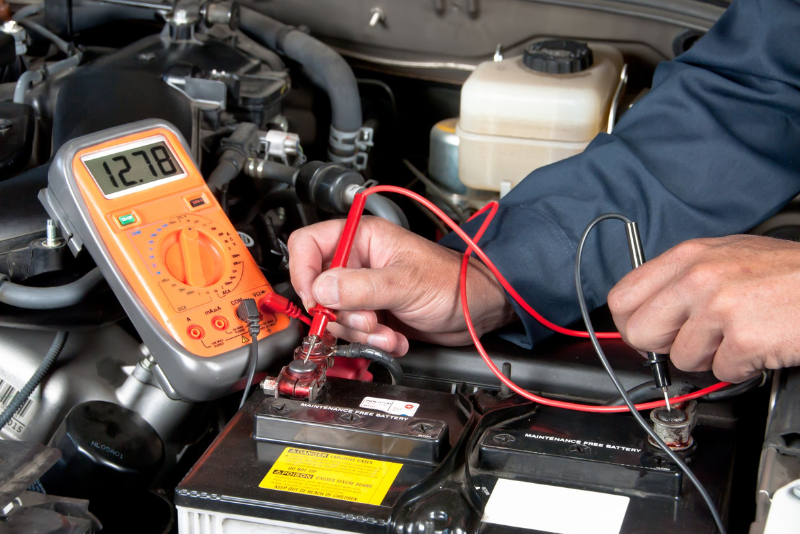
Because of the local heat, car batteries tend to have a shorter lifetime than you’d hope. If it’s been roughly 3 to 4 years since you’ve replaced yours and there’s a visit to the workshop coming up soon, be sure to get it tested while you’re there. It's a quick check, and it helps make sure you won’t end up stranded because your battery gave up on a 34°C afternoon.
Heat hacks worth trying
For your drive
A windshield sunshade
One of the cheapest, most effective things you can do for your parked car. A reflective sunshade on your dashboard blocks direct sunlight from turning your cabin into an oven, and even a cheap can reduce your car’s internal temperature by up to 2°C.
A cooling seat cushion
Nothing’s worse than swamp butt. Some seat cushions contain cooling gel, while fan-powered versions plug into your car's 12V socket or USB port.
A steering wheel cover
A small thing, but a baked steering wheel after a long park is unpleasant to grab and can be genuinely painful in extreme heat. A breathable, heat-resistant cover keeps things manageable and protects the wheel's material from cracking over time.
For you
A fan-cooling jacket

Originally seen in photos of Japanese construction workers, these jackets have been having a moment on social media, and are now way more attainable for anyone with a search engine. Just be sure to check online reviews before buying, as fan positions and effectiveness can vary quite a bit between brands.
A neck fan

If a full jacket sounds like too much, a neck fan is a more compact, hands-free option. These U-shaped devices rest on your shoulders and direct airflow up toward your neck and face — genuinely useful when you're walking between the car and an air-conditioned building, or waiting outdoors for any stretch of time.
A cooling towel
This is the lowest-tech option on this list, and arguably the most practical one to actually have on you when it matters. Soak it, wring it out, drape it on your neck — the evaporative cooling effect kicks in quickly. You’ll look like an unker or someone who really wants you to know that they just finished a set at the gym, but it beats… the heat.
See you on the road,
Amanda 💙
(Photo from: Singapore Tourism Board)


